What is a BTU?
The British Thermal Unit, or BTU, is an energy unit. It is approximately the energy needed to heat one pound of water by 1 degree Fahrenheit. 1 BTU = 1,055 joules, 252 calories, 0.293 watt-hours, or the energy released by burning one match. 1 watt is approximately 3.412 BTU per hour. Our BTU calculator uses these conversions to give you accurate results in multiple units.
BTU is often used as a point of reference for comparing different fuels. Even though they're physical commodities and are quantified accordingly, such as by volume or barrels, they can be converted to this unit depending on the energy or heat content inherent in each quantity. As a unit of measurement, it is more useful than physical quantity because of fuel's intrinsic value as an energy source. Whether you are evaluating heating needs for a furnace or cooling requirements for an air conditioner, understanding the underlying ratings helps you select the right equipment.
Understanding BTUs is essential when shopping for heating and cooling equipment. Air conditioners, furnaces, heat pumps, and water heaters all have BTU ratings that indicate their heating or cooling capacity. Choosing the right BTU rating ensures your system operates efficiently without wasting energy or struggling to maintain comfortable temperatures. Our BTU calculator on this page helps you determine the exact capacity needed for your specific space.
Size and Ceiling Height
Unsurprisingly, a smaller room requires less energy to cool or heat. Typically, heating and cooling needs are measured based on the volume of the space. To calculate volume, multiply the floor area by the ceiling height. A room with standard 8-foot ceilings requires less capacity than a room with vaulted or cathedral ceilings of the same floor area.
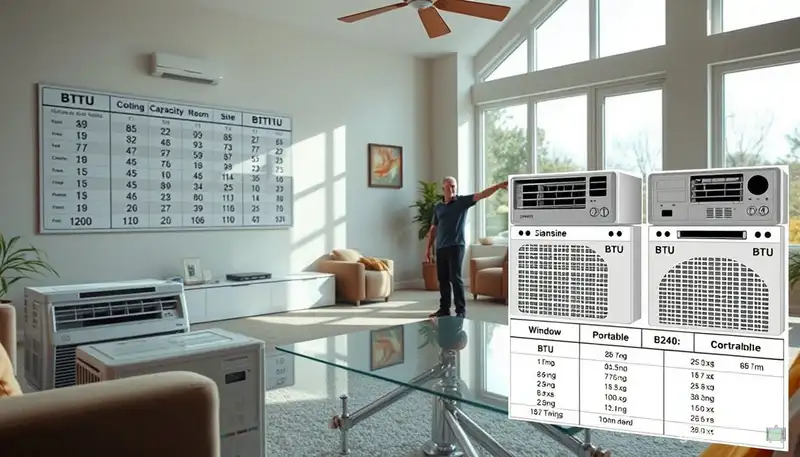
The following is a rough estimation of what a cooling system would need to effectively cool a room/house based only on the square footage of the room/house, as provided by EnergyStar.gov.
| Area To Be Cooled (sq ft) |
Capacity Needed (BTU/hr) |
| 100 to 150 | 5,000 |
| 150 to 250 | 6,000 |
| 250 to 300 | 7,000 |
| 300 to 350 | 8,000 |
| 350 to 400 | 9,000 |
| 400 to 450 | 10,000 |
| 450 to 550 | 12,000 |
| 550 to 700 | 14,000 |
| 700 to 1,000 | 18,000 |
| 1,000 to 1,200 | 21,000 |
| 1,200 to 1,400 | 23,000 |
| 1,400 to 1,500 | 24,000 |
| 1,500 to 2,000 | 30,000 |
| 2,000 to 2,500 | 34,000 |
These estimates assume standard 8-foot ceilings and average insulation. If your ceiling is higher than 8 feet, you should increase the calculated BTUs by approximately 10 percent for each additional foot of ceiling height. For example, a 200 square foot room with 10-foot ceilings would need about 20 percent more BTUs than the same room with 8-foot ceilings. Our BTU calculator accounts for ceiling height automatically, saving you from manual adjustments.
When measuring your space, include adjacent areas that are not separated by doors. An open-concept living and dining area should be measured as one continuous space rather than two separate rooms. Doorways without doors or wide archways allow air to flow freely between spaces, meaning your system must handle the combined volume.
Insulation Condition
Thermal insulation is defined as the reduction of heat transfer between objects in thermal contact or in the range of radiative influence. The importance of insulation lies in its ability to lower energy consumption by managing the loss of heat.
Generally, newer homes have better insulating ability than older homes due to technological advances as well as stricter building codes. Owners of older homes with dated insulation who decide to upgrade their insulation may not only benefit from lower utility bills, but may also see an appreciation in the value of their homes.
Thermal resistance, which is a measure of a material's resistance to heat flow, is indicated by a material's R-value. The higher the R-value of a certain material, the more resistant it is to heat transfer. Common insulation materials include fiberglass, cellulose, foam board, and spray foam, each with different R-values per inch of thickness.
Proper insulation reduces the workload on your heating and cooling system, leading to lower energy bills and extended equipment life. The US Department of Energy recommends R-values ranging from R-30 to R-60 for attics depending on your climate zone, and R-13 to R-21 for walls. If you are unsure about your current insulation levels, consider a professional energy audit to identify areas for improvement. Combine your insulation assessment with our BTU calculator to see exactly how much capacity you need.
Desired Temperature Increase or Decrease
To find the desired change in temperature to input into the calculator, find the difference between the unaltered outdoor temperature and the desired temperature. As a general rule, a temperature between 70 and 80°F is comfortable for most people during summer, while 65-72°F is typical for winter heating.
For example, a home owner in Atlanta might want to determine their heating requirements during winter. Atlanta winters tend to hover around 45°F and temperatures may fall as low as 30°F occasionally. Given that the desired temperature of the residents is 75°F, the desired temperature increase would be 75°F - 30°F = 45°F. The greater the temperature difference between indoors and outdoors, the more capacity your system needs to maintain comfort. Our calculator automatically factors in this difference to give an accurate result.
Climate zone plays a major role in your capacity requirements. Homes in hot climates like Phoenix or Houston need more cooling capacity than homes in mild climates like San Francisco. Similarly, homes in cold climates like Minneapolis or Chicago need significantly more heating capacity. Our BTU calculator accounts for your local climate to give you accurate results without manual zone lookup tables.
Other Factors
- Number of residents: A person's body dissipates heat into the surrounding atmosphere, so the more people there are, the more BTUs required to cool the room.
- Location of the air conditioner condenser: Try to place the air conditioner condenser on the shadiest side of the house (typically north or east).
- Size of air conditioning condenser: Units too big cool homes too rapidly. If the unit is too small, it will run too often throughout the day. Always consult a BTU calculator before purchasing.
- Ceiling fan usage: Ceiling fans can help with lowering energy consumption by improving air circulation.
- The color of the roof: A darker surface absorbs more radiant energy than a lighter one.
- Decreasing efficiency over time: Like most appliances, the efficiency of a heater or air conditioner decreases with usage.
- Shape of the home: A long narrow house has more walls than a square house with the same square footage, which means more heat loss.
How to Use a BTU Calculator
Using a BTU calculator is straightforward. Start by measuring the square footage of the room or area you need to cool or heat. Multiply the length by the width for rectangular rooms. For irregularly shaped rooms, divide the space into smaller rectangles and add the areas together.
Next, input the ceiling height, number of occupants, insulation quality, sun exposure, and your local climate. Each of these factors adjusts the base calculation to give you a customized result. Our BTU calculator on this page handles both cooling and heating calculations, so you can use it year-round for any room in your home.
The calculator provides results in BTU/hr, equivalent watts, and tons of refrigeration. This flexibility helps you compare different equipment options regardless of how they rate their capacity. For example, a window AC might advertise 12,000 BTU/hr, while a central system might be described as 3 tons. Our calculator outputs all three values so you can shop with confidence.
For best results, follow this step-by-step process: First, measure your room's length and width accurately using a tape measure, then calculate the square footage. Second, note the ceiling height since this affects the air volume. Third, assess your insulation quality honestly — if your home is older and you are unsure about insulation, it is safer to select "average" or "poor" rather than overestimating. Fourth, consider the room's sun exposure by noting which direction the largest windows face. Finally, input all these values into our BTU calculator and review the detailed breakdown showing how each factor influences the final recommendation. This transparency helps you understand which improvements would reduce your cooling needs the most.
Choosing the Right AC Unit Size
Selecting the correct air conditioner size is crucial for comfort and efficiency. Getting the AC size right means your unit will run in optimal cycles, removing humidity while maintaining the set temperature. An undersized unit runs constantly without reaching the desired temperature, driving up electricity costs. An oversized unit cools too quickly, failing to remove humidity properly and leaving the room feeling damp and clammy. Both scenarios result in higher energy bills and reduced equipment lifespan. Avoid these problems by using a BTU calculator before making any purchase decisions.
Use the results from our BTU calculator to match your requirements to standard AC sizes. Common window AC sizes include 5,000 BTU (small bedrooms up to 150 sq ft), 8,000 BTU (medium living rooms 250-350 sq ft), 12,000 BTU (large rooms 400-550 sq ft), and 18,000 BTU or more for open-plan areas or small apartments. For central air conditioning, 24,000 to 60,000 BTU systems (2 to 5 tons) are typical for whole-house installation depending on total square footage.
Always check the Energy Efficiency Ratio (EER) or Seasonal Energy Efficiency Ratio (SEER) rating when purchasing. Higher ratings mean better energy efficiency and lower operating costs over time. A unit with a higher SEER rating may cost more upfront but can save hundreds of dollars in electricity costs over its lifetime. If you are financing a new system, use our auto loan calculator to estimate monthly payments.
Consider the installation location for window units. North-facing windows receive less direct sunlight, making them ideal for AC installation. South and west-facing windows expose the unit to more sun, reducing its efficiency. For central systems, the outdoor condenser unit should be placed in a shaded area with good airflow for optimal performance. Keep vegetation trimmed at least two feet away from the condenser to ensure proper air circulation.
Window air conditioners are the most common choice for single-room cooling and come in sizes from 5,000 to 25,000 BTU/hr. They are relatively inexpensive and easy to install but can block window views and let in outdoor noise. Split-system air conditioners offer a quieter, more permanent solution with the compressor unit placed outside and an indoor air handler mounted on the wall. These are available in capacities from 9,000 to 36,000 BTU/hr and are more energy-efficient than window units. Portable air conditioners are movable and require no permanent installation but are generally less efficient, typically producing 8,000 to 14,000 BTU/hr. Use our conversion calculator to convert between BTU, watts, and tons when comparing different equipment options.
Tips for Reducing Your BTU Needs
Reducing your heating and cooling requirements saves money on equipment and energy bills. Before purchasing, evaluate your specific heating needs with a BTU calculator to avoid oversizing. Improve insulation: Adding attic insulation, sealing gaps around windows and doors, and using weather stripping can reduce heating and cooling needs by 20-30 percent. The attic is often the most cost-effective place to add insulation since heat rises and escapes through the roof. Use our insulation calculator to determine the right R-value for your home.
Install ceiling fans: Ceiling fans improve air circulation, making a room feel cooler in summer and helping distribute warm air in winter. This allows you to set your thermostat a few degrees higher in summer and lower in winter without sacrificing comfort.
Use window treatments: Blinds, curtains, and shades block solar heat gain during summer and reduce heat loss during winter. Reflective window film can also reduce cooling needs significantly in sunny climates.
Maintain your HVAC system: Regular maintenance including filter changes, coil cleaning, and duct sealing keeps your system running efficiently and reduces the capacity required to maintain comfortable temperatures. A well-maintained system can be 15-20 percent more efficient than one that is neglected. Using a programmable thermostat to adjust temperatures when you are away further reduces load and lowers your monthly utility bills.
Understanding BTU, Ton, and Watt Ratings
When shopping for HVAC equipment, you will encounter three common rating units: BTUs, tons, and watts. Understanding the relationship between them helps you make informed purchasing decisions. The BTU rating is the number used to compare different units. One ton of cooling capacity equals 12,000 BTU/hr, which originated from the amount of heat needed to melt one ton of ice over 24 hours.
Watts measure electrical power consumption rather than cooling capacity. To convert BTU/hr to watts, multiply by 0.293. A 12,000 BTU/hr window air conditioner uses approximately 3,516 watts of power. The Energy Efficiency Ratio (EER) is calculated by dividing the BTU rating by the wattage, giving you a measure of how efficiently the unit converts electricity into cooling power. Higher EER ratings mean lower operating costs.
For central air conditioning systems, look for the SEER (Seasonal Energy Efficiency Ratio) rating, which measures efficiency across an entire cooling season. Modern high-efficiency systems have SEER ratings of 16 or higher, while older units may have SEER ratings of 10 or less. Upgrading from a 10 SEER to a 16 SEER system can reduce your cooling energy consumption by approximately 35 percent. The same principle applies to heating needs — check the HSPF (Heating Seasonal Performance Factor) for heat pumps to ensure efficient winter operation.
When comparing portable vs window vs central AC units, consider that window units are typically the most efficient for single rooms because they exhaust heat directly outside. Portable AC units are less efficient because they use indoor air for cooling the condenser, creating negative pressure that draws warm air in from outside. Central AC systems are most efficient for cooling entire homes but have higher installation costs. Use our BTU calculator to determine the minimum capacity you need, then shop for the most efficient unit within that range. Our conversion calculator is also handy for quickly converting between BTU, watt, and ton ratings when reviewing equipment specifications.
Seasonal Energy Efficiency Considerations
BTU requirements change with the seasons, and understanding these variations helps you use your HVAC system more efficiently. During summer, your air conditioner works hardest in the afternoon when outdoor temperatures peak. Using programmable thermostats to reduce cooling during hours when the home is empty can significantly lower energy consumption without sacrificing comfort. Setting your thermostat just 5 degrees higher when away can reduce cooling costs by 10-15 percent.
In winter, heating needs vary based on outdoor temperature fluctuations. A heat pump system may struggle to maintain efficiency in extreme cold, while a gas furnace provides consistent heat regardless of outdoor conditions. Consider supplemental heating sources like space heaters for rarely used rooms rather than heating the entire house to the same temperature.
Proper seasonal maintenance makes a significant difference. Clean or replace air filters monthly during peak usage seasons. Have your system professionally inspected before summer cooling season and before winter heating season. These simple steps ensure your system operates at peak efficiency when you need it most, potentially reducing your annual energy bills by hundreds of dollars. Use our fuel cost calculator to compare the operating costs of different heating fuels like natural gas, propane, oil, and electricity based on your local utility rates and the BTU requirements calculated here.
Consider zoning your home with separate thermostats for different areas. This allows you to heat or cool only the rooms you are using, reducing overall energy consumption. Bedrooms can be kept cooler at night for better sleep, while living areas remain comfortable during the day. Smart thermostats learn your schedule and adjust temperatures automatically, potentially saving 10-15 percent on heating and cooling costs annually. Combining proper insulation, efficient equipment, and smart controls creates the most cost-effective approach to home climate management.
Common BTU Calculation Mistakes
Many homeowners make errors when estimating their BTU needs. Ignoring ceiling height is one of the most common mistakes. A room with 12-foot ceilings requires significantly more BTUs than a standard 8-foot ceiling room, even with the same square footage. Always measure and input your actual ceiling height rather than assuming standard height.
Overlooking occupancy: Each person adds about 600 BTUs of heat to a room. A home office with multiple people or a frequently used living room needs more cooling power than a spare bedroom.
Forgetting about appliances: Kitchens generate substantial heat from ovens, refrigerators, and dishwashers. A kitchen may need 4,000 additional BTUs compared to a bedroom of the same size. Similarly, home offices with computers and electronics generate more heat than empty rooms, requiring additional cooling capacity.
Using generic rules of thumb: While 20 BTUs per square foot is a useful starting point, it cannot replace a detailed calculation that accounts for insulation, sun exposure, climate, and other factors specific to your space. A room that gets afternoon sun in Phoenix requires far more cooling than the same room in Seattle, even if both have identical square footage.
Not accounting for open floor plans: Modern homes often feature open-concept living areas where the kitchen, dining, and living room flow together without doors. These spaces should be measured as one continuous area rather than separate rooms. A 400-square-foot open-concept space needs a single 9,000 to 10,000 BTU unit rather than multiple smaller units. Similarly, hallways and entryways that are open to main living areas add to the total volume that needs conditioning. Check the heat index calculator to understand how humidity and temperature combine to affect comfort in your specific space.
How to Measure Your Room for BTU Calculation
Accurate measurements are the foundation of a correct BTU calculation. Start by measuring the length and width of each room using a tape measure. For rectangular rooms, multiply length by width to get the square footage. For L-shaped or irregular rooms, divide the space into rectangles, calculate each area separately, and add them together.
Next, measure the ceiling height from floor to ceiling. Standard ceilings are 8 feet, but many modern homes have 9 or 10-foot ceilings, and older homes may have higher or lower ceilings. Include this measurement in your BTU calculator inputs for the most accurate results. Also note the number and size of windows, as large windows or sliding glass doors can significantly increase heat gain in summer and heat loss in winter.
Consider the room's orientation relative to the sun. South-facing rooms receive the most sunlight throughout the day in the northern hemisphere, while north-facing rooms receive the least. West-facing rooms get intense afternoon sun, which is the hottest part of the day. East-facing rooms receive morning sun but are shaded in the afternoon. These orientation factors affect how many BTUs your cooling or heating system needs to maintain comfortable temperatures.
BTU Requirements for Different Room Types
Different rooms in your home have unique requirements based on their function, size, and typical occupancy. Bedrooms generally need less cooling since they are used primarily for sleeping and have lower heat generation from occupants and electronics. A standard master bedroom of 200-300 square feet typically requires 5,000 to 7,000 BTUs, while a smaller guest bedroom may need only 4,000 to 5,000 BTUs.
Living rooms and family rooms demand higher BTU capacity because they accommodate more people, contain larger electronics like televisions and gaming consoles, and often have more windows. A 300-400 square foot living room may need 7,000 to 9,000 BTUs. Kitchens require even more cooling capacity due to heat from ovens, stoves, refrigerators, and dishwashers. A kitchen of the same size may need 9,000 to 12,000 BTUs, especially during meal preparation hours. Use our paint calculator to estimate painting needs if you are remodeling any of these rooms before installing new equipment.
Home offices and dedicated home gyms have specific BTU considerations. Home offices contain computers, monitors, and other electronics that generate significant heat, adding 1,000 to 2,000 BTUs to the standard calculation. Home gyms generate substantial body heat during exercise and may need additional ventilation. A home gym of 200 square feet could require 6,000 to 8,000 BTUs versus the 4,000 to 5,000 BTUs a spare bedroom of the same size would need. Run these numbers through our BTU calculator for a precise recommendation tailored to your specific room dimensions and usage patterns. Basements and finished attics also require special attention — basements are naturally cooler and may need less cooling but more heating, while attics tend to be hotter due to solar heat gain through the roof and may need 20-30 percent more cooling capacity than above-grade rooms. Our BTU calculator adjusts for these unique conditions automatically.
Evaporative Coolers vs Air Conditioners: BTU Considerations
Evaporative coolers, also known as swamp coolers, work differently from traditional air conditioners. Instead of using refrigerant and compressors, they cool air by passing it over water-saturated pads. This process is much more energy-efficient than compressor-based cooling, using about 75 percent less electricity. However, evaporative coolers are only effective in dry climates with low humidity.
When sizing an evaporative cooler, the measurement is typically in CFM (cubic feet per minute) rather than BTUs. A general rule is that you need 20-40 CFM per square foot of living space. For example, a 1,500 square foot home would need an evaporative cooler with 30,000 to 60,000 CFM capacity. In contrast, the same home would need a 30,000 to 36,000 BTU central air conditioner (2.5 to 3 tons).
Evaporative coolers are most effective in states like Arizona, New Mexico, Nevada, Utah, Colorado, and parts of California, Texas, and Idaho. In humid climates, traditional air conditioning is more effective at both cooling and dehumidifying. Use our BTU calculator to determine the right AC size for your home, and consider evaporative cooling as an alternative if you live in an arid region.
Final Thoughts on BTU Calculations
Getting the calculation right is essential for comfort, energy efficiency, and equipment longevity. Our BTU calculator takes the guesswork out of sizing your air conditioner or heater by accounting for all the important factors that affect your heating and cooling needs.
Remember that accurate measurements lead to accurate results. Take the time to measure your room dimensions carefully and honestly assess your insulation quality and sun exposure. With the right BTU estimate, you will save money on equipment, reduce energy bills, and enjoy a more comfortable living space year-round. Pair our calculator with an electricity cost calculator to estimate your total cooling and heating expenses, and use the fuel cost calculator to compare energy costs between different heating sources.
Proper HVAC sizing is one of the most important decisions you will make for your home comfort and energy budget. Whether you are installing a window unit for a single bedroom or sizing a central system for a new home, taking the time to use a comprehensive BTU calculator ensures you get it right the first time. An accurately sized system operates more efficiently, lasts longer, and provides better temperature and humidity control than one chosen by guesswork alone. Bookmark this page and return whenever you need to calculate BTU requirements for any room in your home.
To learn more about btu calculator, visit timeanddate.com.