Last updated: June 2026
By CalcOrigin Editorial Team
What is Body Surface Area (BSA)?
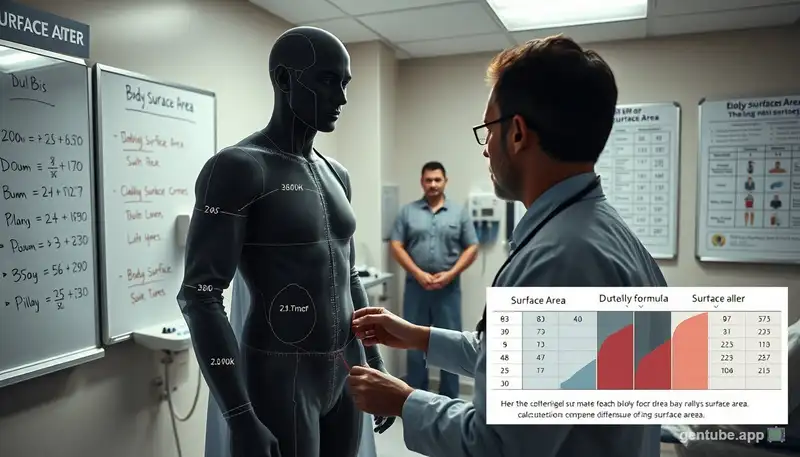
Body Surface Area (BSA) is the total surface area of a human body, measured in square meters. It is a measure of the external surface area of the body in square meters. BSA is an important metric in medicine because it correlates closely with metabolic rate, cardiac output, drug clearance, and other physiological processes that scale with body size rather than weight alone. Unlike simple weight-based measurements, BSA accounts for both height and weight to provide a more comprehensive assessment of overall body size that better reflects the body's functional capacity and metabolic needs.
Direct measurement of BSA is difficult because it requires specialized equipment such as 3D body scanners, surface integration devices, or complex geometric calculations that are impractical for routine clinical use, and as such many formulas have been published that estimate BSA based on height and weight. The most widely used formula is the Du Bois formula, which has been shown to be effective for estimating body surface area in both obese and non-obese patients, making it the default choice in most clinical settings. BSA estimation plays a critical role in treatment planning for many medical conditions, particularly in oncology where chemotherapy doses are calculated based on BSA to achieve optimal therapeutic effects while minimizing harmful side effects.
The concept of body surface area dates back to the early 20th century when researchers recognized that many physiological functions correlate better with surface area than with weight alone. Basal metabolic rate, blood volume, and oxygen consumption all scale more closely with BSA than with body weight, making BSA a valuable tool in clinical medicine. Understanding your BSA can help you and your healthcare provider make more informed decisions about treatments that depend on accurate body size measurements. The relationship between BSA and metabolic rate forms the basis for many clinical calculations, as the body's energy requirements and physiological processes are more closely tied to surface area than to simple mass. This relationship is known as the surface law of metabolism and explains why smaller animals have higher metabolic rates per unit of body weight than larger animals. The same principle applies when comparing humans of different sizes, making BSA an indispensable tool for understanding individual metabolic needs and designing appropriate medical treatments based on accurate body size assessment. Our BMI calculator provides another useful measure of body composition that complements BSA for overall health assessment.
Clinical Uses of BSA
BSA is often used in clinical purposes over body weight because it is a more accurate indicator of metabolic mass (the body's need for energy). Metabolic mass can be estimated using fat-free mass, which includes bones, tendons, muscles, blood, nerves, and internal organs. Because metabolic rate scales more closely with surface area than with weight, BSA provides a more physiologically relevant basis for many medical calculations than simple body weight.
BSA is used in various clinical settings:
- Chemotherapy dosing - The most common use of BSA, ensuring cancer patients receive appropriate drug amounts
- Cardiac index - To relate heart performance to body size for accurate cardiovascular assessment
- Drug dosage calculations - For medications where weight-based dosing is inappropriate or less accurate
- Burn treatment - To estimate the percentage of body surface affected by burns and guide fluid resuscitation, with the Wallace rule of nines providing a rapid assessment method based on BSA percentages for different body regions
- Metabolic rate estimation - BSA correlates closely with basal metabolic rate and is used in metabolic studies to compare energy expenditure across individuals of different sizes
- Renal function assessment - Kidney function measurements such as GFR are often normalized to BSA to account for differences in body size
Note: BSA may not be accurate at the extremes of height and weight. In such cases, alternative methods may provide better estimates for clinical decision making.
BSA Calculation Formulas
All BSA formulas use height and weight as inputs, but they differ in the mathematical relationship between these variables. Where BSA is in m², W is weight in kg, and H is height in cm, the formulas are:
Du Bois Formula
BSA = 0.007184 × W0.425 × H0.725
Du Bois D, Du Bois EF (1916). "A formula to estimate the approximate surface area if height and weight be known". Archives of Internal Medicine 17 (6): 863-71.
Mosteller Formula
BSA = 0.016667 × W0.5 × H0.5
Mosteller RD. "Simplified calculation of body-surface area". N Engl J Med 1987; 317:1098.
Haycock Formula
BSA = 0.024265 × W0.5378 × H0.3964
Haycock GB, Schwartz GJ, Wisotsky DH "Geometric method for measuring body surface area: A height-weight formula validated in infants, children and adults" J Pediatr 1978, 93:62-66.
Gehan and George Formula
BSA = 0.0235 × W0.51456 × H0.42246
Gehan EA, George SL, Cancer Chemother Rep 1970, 54:225-235
Boyd Formula
BSA = 0.03330 × W(0.6157 - 0.0188 × log10(W)) × H0.3
Boyd, Edith (1935). The Growth of the Surface Area of the Human Body. University of Minnesota.
Fujimoto Formula
BSA = 0.008883 × W0.444 × H0.663
Fujimoto S, et al. Studies on the physical surface area of Japanese. Nippon Eiseigaku Zasshi 1968;5:443-50.
Takahira Formula
BSA = 0.007241 × W0.425 × H0.725
Fujimoto S, et al. Studies on the physical surface area of Japanese. Nippon Eiseigaku Zasshi 1968;5:443-50.
Schlich Formula
Women: BSA = 0.000975482 × W0.46 × H1.08
Men: BSA = 0.000579479 × W0.38 × H1.24
Schlich E, et al. "3-D-Body-Scan als anthropometrisches Verfahren". Ernahrungs Umschau 2010;57:178-183
Each formula was derived from different study populations and may perform better in specific patient groups. The Du Bois formula remains the most validated across diverse populations, while the Mosteller formula is popular in clinical practice due to its simplicity. The Haycock formula was specifically designed for and validated in pediatric populations, making it a preferred choice for children. The Gehan and George formula was derived from a larger sample than Du Bois and may offer better accuracy in certain groups. Formulas like Fujimoto and Takahira were developed for Japanese populations and may underestimate BSA in non-Asian individuals. For most clinical purposes, the differences between formulas are small enough that consistency in using the same formula for monitoring over time matters more than choosing the single most accurate formula. When a patient is monitored using the same formula across multiple visits, the trend in BSA values provides reliable clinical information regardless of which formula is selected, as long as the same calculation method is used consistently throughout the treatment period.
Why BSA Matters for Chemotherapy Dosing
One of the most critical applications of BSA measurement is in chemotherapy dosing for cancer treatment. Chemotherapy drugs have narrow therapeutic windows, meaning the difference between an effective dose and a toxic dose is small. Dosing based on BSA helps ensure patients receive enough medication to fight their cancer while avoiding dangerous side effects that can occur with overdosing. The practice of BSA-based dosing was established in the 1950s and remains the standard of care in medical oncology today. Without BSA-based dosing, patients would either receive insufficient treatment or face unacceptable toxicity risks, making BSA calculation a critical safety tool in cancer care.
The relationship between BSA and drug clearance is well established for many chemotherapeutic agents. Patients with larger BSA typically have higher blood volume, greater organ mass, and faster drug metabolism, requiring larger absolute doses to achieve the same drug concentration in the blood. Conversely, patients with smaller BSA need proportionally smaller doses to avoid toxicity. Studies have shown that BSA-based dosing reduces inter-patient variability in drug exposure compared to fixed dosing, though variability still exists due to differences in organ function, genetics, and other factors that affect drug metabolism.
Ongoing research continues to refine chemotherapy dosing strategies. Some newer targeted therapies and immunotherapies use fixed dosing rather than BSA-based dosing because their wider therapeutic windows make precise individualization less critical. However, for traditional cytotoxic chemotherapy, which remains the backbone of treatment for many cancers, BSA-based dosing continues to be the standard approach endorsed by oncology guidelines worldwide. Drug manufacturers specify BSA-based dosing in their prescribing information for most chemotherapy agents, and hospital pharmacies routinely rely on BSA calculations when preparing these medications for patient administration. Researchers are also exploring therapeutic drug monitoring, where actual blood drug levels are measured and doses adjusted accordingly, as a more personalized alternative to BSA-based dosing, though this approach is currently limited to specialized cancer centers and specific drugs where therapeutic drug monitoring has been validated. Despite these developments, BSA remains an essential tool in oncology practice, and accurate BSA calculation is critical for patient safety and treatment efficacy across virtually all cancer treatment settings. Use our calorie calculator to support proper nutrition during treatment.
BSA in Cardiac Function Assessment
Cardiac index, which is cardiac output divided by BSA, is a key measurement in cardiology that allows clinicians to assess heart function relative to body size. The normal cardiac index ranges from 2.5 to 4.0 liters per minute per square meter. This normalization by BSA is essential because a larger person naturally requires higher cardiac output to perfuse their greater body mass, and using absolute cardiac output alone would not accurately reflect whether the heart is functioning adequately for that individual. The cardiac index is particularly important in critical care settings where precise hemodynamic monitoring guides treatment decisions, such as determining whether a patient in shock needs medications to support heart function or fluids to increase blood volume. The cardiac index provides a more reliable guide for these critical treatment decisions than absolute cardiac output measurements alone, helping clinicians optimize care for each patient's specific body size and hemodynamic needs.
BSA is also used in calculating other cardiovascular parameters such as stroke volume index and systemic vascular resistance index. These indexed measurements allow cardiologists to compare patients of different body sizes on an equal footing and identify abnormalities that might be missed when using absolute values. For example, a cardiac output of 5 L/min might be normal for a small woman but inadequate for a large man. Indexing by BSA accounts for these body size differences and provides a more accurate assessment of cardiovascular function across diverse patient populations.
In echocardiography and cardiac imaging, BSA is used to normalize measurements of heart chamber sizes, valve areas, and ventricular mass. The left ventricular mass index, calculated by dividing left ventricular mass by BSA, is a critical predictor of cardiovascular outcomes. An elevated left ventricular mass index indicates left ventricular hypertrophy, which is associated with increased risk of heart attack, stroke, and heart failure. By accounting for body size, BSA-indexed measurements provide more accurate prognostic information than absolute measurements alone. Similarly, aortic valve area indexed by BSA helps clinicians determine the severity of aortic stenosis, with an indexed valve area below 0.6 cm²/m² indicating severe disease that may require surgical intervention. Our BMR calculator can help you understand your metabolic rate, which is closely tied to cardiovascular health. By providing insights into your energy expenditure, BMR calculations complement BSA-based cardiac assessments to give a more complete picture of your overall health and metabolic function. Together, these measurements provide healthcare providers with valuable information for designing personalized treatment plans based on your individual body composition and metabolic characteristics. The combination of BSA and BMR data helps healthcare providers evaluate how your body size and energy needs relate to your heart function.
BSA vs BMI: Key Differences
Body Surface Area (BSA) and Body Mass Index (BMI) are two different measurements that serve different purposes in health assessment. BMI is calculated as weight in kilograms divided by height in meters squared and is primarily used to classify individuals into weight categories such as underweight, normal weight, overweight, and obese. BMI is a simple and useful screening tool for population-level health assessment, but it has significant limitations at the individual level because it does not distinguish between muscle and fat mass or account for body composition differences. Despite its widespread use, BMI was never intended to be a diagnostic tool for individual health but rather a statistical tool for population studies.
BSA, by contrast, measures the total surface area of the body and is used primarily for medical dosing and physiological normalization. While BMI is a simple ratio, BSA incorporates both height and weight in a more complex mathematical relationship that better reflects the three-dimensional nature of the human body. This makes BSA more appropriate for applications where body size, rather than body composition, is the relevant factor. The two measurements are correlated but not interchangeable, and healthcare providers choose between them based on the specific clinical application.
For medical dosing decisions, BSA is generally preferred over BMI because drug clearance rates correlate better with surface area than with BMI, particularly for medications that distribute into lean body tissues rather than fat. Many chemotherapy protocols specify doses in milligrams per square meter, and the clinical trials that established safe dosing regimens used BSA-based calculations. For assessing obesity-related health risks, BMI is more appropriate because it has been extensively validated against health outcomes such as cardiovascular disease, diabetes, and mortality. Some newer approaches combine both measurements, using BMI for weight classification and BSA for dosing calculations. Understanding the difference between these two metrics helps patients better understand their healthcare providers' recommendations and why certain measurements are chosen for specific clinical purposes. When your doctor uses BSA for dosing calculations and BMI for weight classification, they are applying the most appropriate tool for each distinct purpose based on decades of clinical research and established medical practice standards. Use our ideal weight calculator to determine a healthy weight range for your height as a complement to your BSA measurements.
BSA in Pediatric Medicine
In pediatric medicine, BSA plays a particularly important role because children vary dramatically in size as they grow, and using weight alone for dosing can lead to significant errors. A child's BSA changes rapidly during the first years of life and continues to increase until adulthood, making accurate measurement essential for safe medication administration. The Haycock formula was specifically developed and validated for use in children, including infants, and is often preferred over the Du Bois formula for pediatric patients because it was derived from a population that included children of all ages. Accurate BSA calculation is especially critical in pediatric oncology, where chemotherapy doses must be precisely tailored to each child's body size to maximize treatment effectiveness while minimizing harmful side effects.
Pediatric drug dosing frequently uses BSA-based calculations, particularly for chemotherapy drugs, certain antibiotics, and medications with narrow therapeutic windows. The standard approach is to calculate the pediatric dose as a fraction of the adult dose based on the ratio of the child's BSA to the standard adult BSA of 1.73 m². This method accounts for children's higher metabolic rates and faster drug clearance compared to adults, which means that children often require higher weight-adjusted doses than adults to achieve the same therapeutic effect. Careful BSA calculation is therefore essential for ensuring both safety and efficacy in pediatric pharmacotherapy. However, BSA-based dosing for children has limitations, particularly in neonates and premature infants where body proportions differ significantly from older children and adults.
Special considerations apply when calculating BSA for children with conditions that affect growth and body proportions. Children with chronic illnesses, growth hormone deficiencies, or genetic syndromes may have unusual height-weight relationships that affect BSA accuracy. In these cases, using height and weight directly measured at the time of treatment is essential, as relying on growth charts or age-based estimates can introduce significant errors. Pediatric oncologists and pharmacists are specially trained in BSA-based dosing for children and follow established protocols to ensure safe and effective treatment. Monitoring a child's BSA over time also provides valuable information about growth and development, as changes in BSA reflect overall changes in body size during childhood and adolescence. Our GFR calculator can help assess kidney function, which is important for pediatric drug dosing and overall health monitoring.
How to Choose the Right BSA Formula
Selecting the most appropriate BSA formula depends on the clinical context and patient population. For general clinical use, the Du Bois formula remains the most widely studied and validated option. It was derived from a small sample of only nine subjects but has proven remarkably robust across diverse populations over more than a century of use. The formula performs well in both normal-weight and obese patients and is the standard against which newer formulas are compared. Most hospitals and cancer centers use the Du Bois formula as their default BSA calculation method due to its extensive validation and established track record in clinical practice across numerous medical specialties.
For pediatric patients, the Haycock formula is often recommended because it was specifically validated in children and may provide more accurate estimates for younger age groups. The Mosteller formula, while simpler, tends to slightly underestimate BSA at the extremes of height and weight and may be less suitable for severely obese or very tall patients. For research purposes, the Gehan and George formula, which was derived from a larger sample than Du Bois, may be preferred when maximum accuracy is desired for research studies where even small differences in BSA estimates could affect study outcomes. Population-specific formulas like Fujimoto and Takahira should be used primarily for Japanese patients, as they were developed specifically for that population and may underestimate BSA in other ethnic groups.
The choice between formulas also depends on practical considerations. The Mosteller formula is popular in bedside clinical practice because it can be calculated mentally or with a simple calculator, making it convenient for quick estimates. The Du Bois formula requires more complex calculations but is easily handled by modern electronic health records and our body surface area calculator. For longitudinal monitoring, consistency in formula selection is more important than choosing the theoretically most accurate option, as the goal is to detect changes over time. Discuss with your healthcare provider which formula is used at your treatment center and whether it is appropriate for your specific clinical situation. Being informed about the different formulas can help you participate actively in treatment decisions and understand how your BSA is being calculated for medical purposes. Asking your healthcare team which formula they use and why is a reasonable question that can help you feel more engaged in your care and better understand the basis for your medication dosing.
Limitations and Considerations for BSA Estimation
While BSA is a valuable clinical tool, it has important limitations that healthcare providers must consider. All BSA formulas are estimates based on mathematical models, not direct measurements, and their accuracy varies across different patient populations. The original Du Bois formula was derived from measurements of only nine subjects, yet it remains widely used despite this limited validation sample. Modern studies have shown that while the formula works well for average-sized adults, its accuracy decreases at the extremes of height and weight, particularly in severely obese patients where body shape deviates significantly from the assumptions underlying the formula. These limitations mean that BSA estimates should always be interpreted within the broader clinical context rather than treated as precise measurements.
Body composition also affects BSA estimation accuracy. Individuals with the same height and weight can have different BSA values because body shape and proportion vary depending on factors such as age, gender, ethnicity, and body fat distribution. Muscular individuals may have different BSA than equally weighted individuals with higher body fat percentages because muscle and fat tissue have different densities and distributions. Amputees present a particular challenge, as standard formulas were designed for intact bodies and may significantly overestimate BSA in patients with limb loss, as the formulas assume a complete body with all limbs present. Similarly, patients with edema or ascites may have altered body water distribution that affects weight-based calculations without a corresponding change in actual surface area, leading to BSA overestimation that could affect medication dosing if not recognized by the treating clinician.
Despite these limitations, BSA estimation remains an essential clinical tool when used appropriately. Healthcare providers should be aware of situations where BSA estimates may be less reliable and use additional clinical judgment when interpreting results. For patients at the extremes of body size or with unusual body proportions, alternative dosing strategies such as therapeutic drug monitoring or fixed dosing may be preferable. The development of three-dimensional body scanning technology offers the potential for more accurate BSA measurement in the future, but for now, formula-based estimation remains the practical standard for clinical care. These advanced scanning methods can create precise digital models of the body and calculate surface area with much greater accuracy than any formula, though their cost and complexity limit widespread adoption to research settings and specialized treatment centers. Use our protein calculator to help manage your nutritional needs in conjunction with your BSA measurements.
To learn more about body surface area calculator, visit Nutrition.gov.
Frequently Asked Questions
What is a normal BSA?
The average BSA for an adult male is approximately 1.9 m² (20.45 ft²) and for an adult female is approximately 1.6 m² (17.22 ft²). Values vary based on age, height, and weight, with younger individuals and those of shorter stature typically having lower BSA values.
Which BSA formula is most accurate?
The Du Bois formula is the most widely used and has been validated in both obese and non-obese patients. However, all formulas provide estimates, and actual BSA can only be measured directly through complex methods like 3D body scanning.
Why is BSA used for chemotherapy dosing?
BSA is used because it provides a more accurate estimate of metabolic mass than body weight alone. This helps calculate appropriate drug doses that achieve therapeutic effects while minimizing toxicity to healthy tissues.
Can BSA be used for children?
Yes, the formulas work for children as well. The Haycock formula was specifically validated in infants, children, and adults. Reference values for children of different ages are available for comparison.
What is the difference between BSA and BMI?
BMI (Body Mass Index) is a simple ratio of weight to height squared, used for weight classification. BSA is a surface area calculation in square meters, used for medical dosing. BSA is more accurate for clinical dosing purposes, while BMI is used for general health screening.
How is BSA calculated?
BSA is calculated using formulas that take height and weight as inputs. The most common is the Du Bois formula: BSA = 0.007184 × W^0.425 × H^0.725, where W is weight in kg and H is height in cm.
What is the Mosteller formula?
The Mosteller formula is a simplified BSA calculation: BSA = 0.016667 × W^0.5 × H^0.5. It is easier to remember but may be slightly less accurate than the Du Bois formula in some patient populations.
What is the cardiac index?
Cardiac index is cardiac output divided by BSA, relating heart performance to body size. A normal cardiac index ranges from 2.5 to 4.0 L/min/m² and is used to assess cardiac function in critical care settings.
What does a BSA of 2.0 mean?
A BSA of 2.0 m² is considered high but can be normal for tall or heavy individuals. BSA values above 2.5 m² may indicate obesity, though BSA alone is not used to diagnose medical conditions.
Can I calculate BSA at home?
Yes, you can estimate your BSA at home using your height and weight with our BSA calculator. Simply enter your measurements and select from multiple formulas to get an instant estimate of your body surface area.
How does BSA affect drug dosing?
Many medications, particularly chemotherapy drugs, are dosed based on BSA because it correlates better with metabolic rate and drug clearance than body weight alone. This ensures patients receive the right dose for their body size.
Is BSA the same as BMI?
No, BSA and BMI are different measurements. BSA measures total body surface area in square meters for medical dosing, while BMI calculates a weight-to-height ratio for weight classification purposes.