About Tire Size Calculator
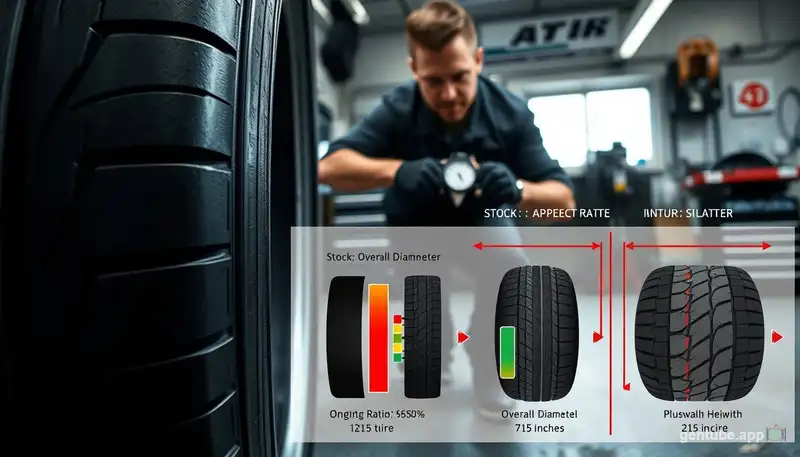
A tire size calculator is an essential tool for anyone who needs to understand tire dimensions, compare different tire sizes, or check how a tire change will affect their vehicle's speedometer accuracy. This calculator provides two main functions: calculating the complete dimensions of a tire from its size code, and comparing two different tires side by side to show the differences in diameter, width, sidewall height, circumference, and speedometer reading. Whether you are replacing worn tires, upgrading to larger wheels, or simply curious about your current tire specifications, this tool gives you accurate measurements in both inches and millimeters.
The tire size calculator uses standard industry formulas to compute all tire dimensions from the tire code. By entering the tire width, aspect ratio, and wheel diameter, the calculator instantly provides the tire diameter, section width, sidewall height, circumference, and revolutions per mile or kilometer. The comparison calculator shows the exact differences between two tires, including how much your speedometer will be off if you switch from one size to another. For other automotive calculations, the speed calculator can help you convert between different speed units and calculate distance and time relationships.
Using a tire size calculator regularly helps you make informed decisions about tire purchases and vehicle modifications. Understanding the exact dimensions of your current and potential tires ensures that you choose replacements that fit properly and maintain your vehicle's safety and performance characteristics. The calculator eliminates guesswork and provides precise measurements that you can verify against manufacturer specifications, giving you confidence in your tire choices and helping you avoid costly mistakes.
Understanding Tire Size Codes
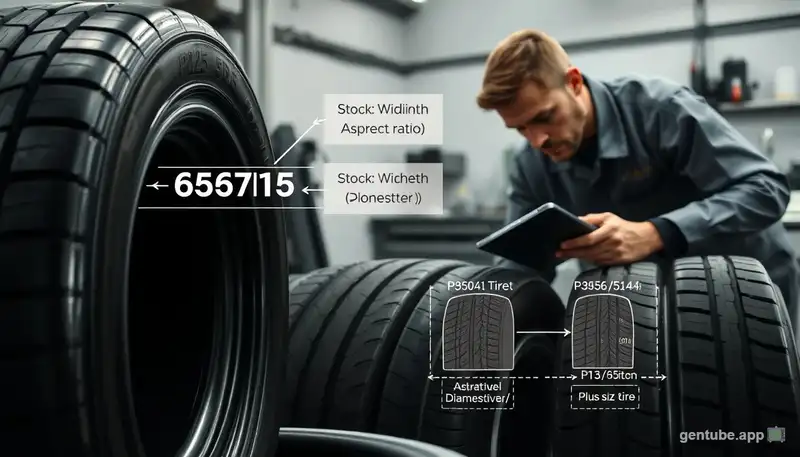
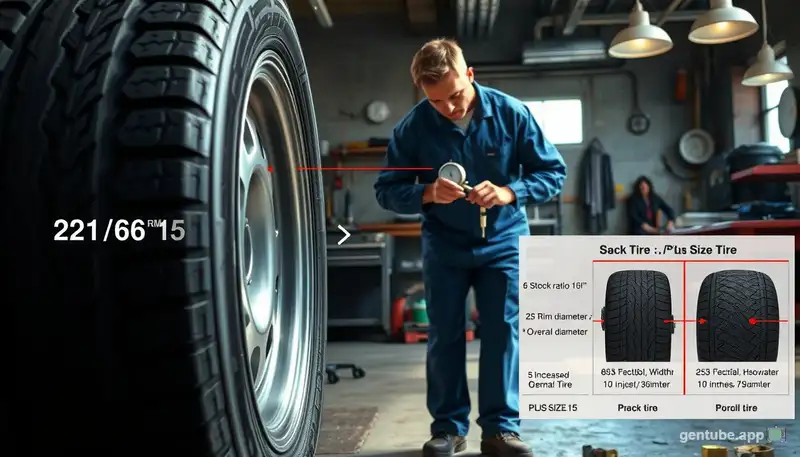
Car tires are described by an alphanumeric code printed on the sidewall. This code contains all the information needed to understand the tire's dimensions and capabilities. A typical tire code looks like P205/55R16, and each part of this code conveys specific information about the tire. Being able to read and interpret the tire code is important for calculating tire dimensions and ensuring you select the correct tires for your vehicle. The tire size calculator uses the numbers from this code to compute all dimensional measurements automatically.
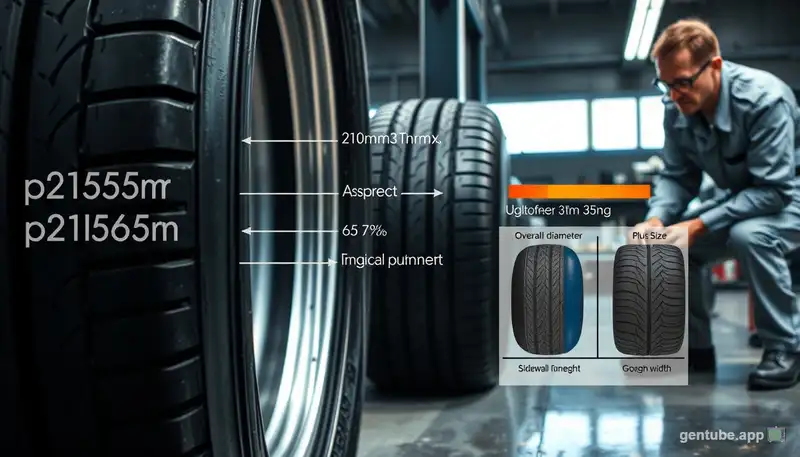
The first part of the code indicates the tire's intended use. P stands for Passenger vehicle, LT means Light Truck, ST indicates Special Trailer, and T designates a Temporary spare tire. The following three-digit number represents the nominal section width in millimeters, measured from the widest point of the outer sidewall to the widest point of the inner sidewall when mounted on a specified rim width. For example, in P205/55R16, the 205 means the tire is 205 millimeters wide. This measurement is critical for determining whether the tire will fit within the wheel well of your vehicle.
The number following the forward slash is the aspect ratio, expressed as a percentage. This ratio describes the relationship between the tire's section height and its section width. An aspect ratio of 55 means the sidewall height is 55 percent of the tire's width. The letter after the aspect ratio indicates the construction type: R for Radial, D for Diagonal or bias-ply, and B for Bias-belted. The final number represents the wheel diameter in inches that the tire is designed to fit. Understanding each component of the tire code helps you use the tire size calculator effectively and communicate accurately with tire professionals when purchasing new tires.
How Tire Dimensions Are Calculated
The dimensions computed by a tire size calculator use standard mathematical formulas based on the tire code values. The section height, also called the sidewall height, is calculated by multiplying the tire width by the aspect ratio percentage. For example, a tire with 205 millimeters width and 55 aspect ratio has a section height of 205 multiplied by 0.55, which equals 112.75 millimeters. This represents the height of the sidewall from the rim to the tread surface and is one of the key factors in determining the overall tire diameter and ride characteristics.
The tire diameter, also called the overall tire height, is calculated by adding the wheel diameter to twice the section height. Using the example above, a 16-inch wheel with a section height of 112.75 millimeters (approximately 4.44 inches) gives a tire diameter of 16 plus 2 times 4.44, which equals 24.88 inches. The tire circumference is then calculated by multiplying the diameter by pi (3.14159). This circumference value is used to determine the number of revolutions the tire makes per mile or kilometer, which directly affects speedometer and odometer accuracy.
The tire size calculator performs all these calculations instantly, providing results in both inches and millimeters for your convenience. Understanding the formulas behind the calculations helps you appreciate how tire dimensions affect your vehicle's performance and why even small changes in tire size can have noticeable effects on speedometer readings, acceleration, and fuel economy. When comparing two tires, the calculator shows the percentage difference in diameter, which is the key metric for determining compatibility and safety. The percentage calculator can help you understand the proportional relationships between different tire measurements.
What to Consider When Changing Tire Size
There are many reasons to change tire or wheel size, including aesthetic preferences, performance improvements, or the need for better traction in specific driving conditions. However, changing tire size requires careful consideration of multiple factors to ensure safety and proper vehicle operation. When changing tire size, there can be significant consequences like increased wear to suspension and brake components, reduced fuel efficiency, and altered handling characteristics. Using the tire size calculator to compare your current and proposed tire sizes is the first step in making an informed decision about tire changes.
Generally, it is recommended to choose tires that have a diameter within 3 percent difference from the factory recommended tires. This tolerance ensures that the tires fit within the wheel well without rubbing against suspension components, brake calipers, or the vehicle body. Exceeding this 3 percent threshold can lead to speedometer inaccuracy, transmission shifting problems in automatic vehicles, incorrect anti-lock brake system (ABS) operation, and potential clearance issues when turning or going over bumps. Always verify clearance by checking at full steering lock and during suspension compression before committing to a tire size change.
Changing tire width affects the contact patch and handling characteristics. Wider tires provide more grip in dry conditions but may reduce fuel economy and increase road noise, which you can analyze further with the gas mileage calculator to understand the impact on your fuel costs. They also require wider wheels to maintain proper tire profile and may cause rubbing at the wheel wells. If you are changing wheel offset along with tire size, the wheel offset calculator helps you determine the correct positioning for proper clearance and handling. The tire size calculator helps you visualize the exact dimensional changes and understand how a different tire size will affect your vehicle's stance and performance. Consulting with a tire professional and checking your vehicle manufacturer's recommendations are essential steps before making any tire size changes.
Speedometer Accuracy and Tire Size
Speedometers and odometers are calibrated by vehicle manufacturers based on the stock tire size that came with the vehicle. When you change to a different tire size, the speedometer reading becomes inaccurate because the distance traveled per wheel revolution changes. Larger tires have a greater circumference, meaning the vehicle travels farther with each revolution than the speedometer expects. This causes the speedometer to read lower than the actual speed. Conversely, smaller tires make the speedometer read higher than actual speed, potentially causing you to drive slower than you think.
The tire size calculator includes a speedometer comparison feature that shows exactly how much your speedometer reading will differ when switching between two tire sizes. For example, if you switch from a 205/55R16 tire to a 225/50R16 tire, the calculator shows the percentage difference in diameter and the corresponding speedometer error at any given speed. At an indicated 60 mph on your speedometer, you might actually be traveling at a different speed depending on the tire size change. This information is crucial for maintaining compliance with speed limits and ensuring safe driving behavior.
In addition to speedometer accuracy, changing tire size also affects your odometer reading, which can impact vehicle resale value and lease mileage calculations. If you install larger tires, your odometer will underreport the distance traveled, potentially making your vehicle appear to have lower mileage than it actually has. This has legal implications for vehicle sales and should be disclosed to potential buyers. The speedometer calculator provides additional tools for understanding these relationships and calculating accurate speed and distance measurements with modified tire sizes.
Tire Width and Performance
Tire width is one of the most important dimensions affecting vehicle performance, handling, and safety. The width of the tire determines the size of the contact patch, which is the area of the tire that is in contact with the road surface. A wider tire generally provides more grip during cornering and braking because it distributes the vehicle's weight over a larger area. However, wider tires also have disadvantages, including increased rolling resistance that reduces fuel economy, higher road noise, and greater susceptibility to hydroplaning on wet roads because water has a longer path to escape from under the tire.
The tire size calculator allows you to see the exact width difference between your current tires and potential replacements. When increasing tire width, you must also consider the wheel width requirements. Most tires have a recommended rim width range specified by the manufacturer, and installing tires on wheels that are too narrow or too wide can cause improper tire profile, reduced handling performance, and increased wear. The aspect ratio must also be adjusted when changing width to maintain the same overall tire diameter, which is why the tire size calculator shows all dimensions together for a complete picture of how a tire change affects your vehicle.
For vehicles used in specific conditions, tire width choices have practical implications. Off-road vehicles often benefit from narrower tires that cut through mud and snow to reach solid ground, while performance cars use wider tires for maximum dry-weather grip. Winter tires are typically narrower than summer tires because a narrower contact patch concentrates more pressure on the road surface, improving traction in snow and ice. Understanding these trade-offs helps you choose the optimal tire width for your driving needs and local climate conditions.
Aspect Ratio Explained
The aspect ratio of a tire is the ratio of its sidewall height to its tread width, expressed as a percentage. This number is a critical factor in determining ride comfort, handling characteristics, and the overall appearance of the tire and wheel combination. A lower aspect ratio, such as 40 or 45, means a shorter sidewall, which provides improved cornering stability and steering response because there is less sidewall flex during turns. This is why performance and sports cars typically use low-profile tires with aspect ratios between 30 and 50.
A higher aspect ratio, such as 65 or 70, provides a taller sidewall that offers more cushioning and a smoother ride over rough roads. These tires are commonly found on trucks, SUVs, and comfort-oriented passenger vehicles. The taller sidewall absorbs road imperfections better than low-profile tires, but it also flexes more during cornering, which can reduce handling precision. The aspect ratio directly affects the tire's load-carrying capacity and inflation pressure requirements, making it an important consideration when selecting replacement tires for your vehicle.
When using the tire size calculator, the aspect ratio is one of the three key inputs along with tire width and wheel diameter. Changing the aspect ratio while keeping the same tire width and wheel diameter will change the overall tire diameter, which affects speedometer accuracy and vehicle clearance. For example, going from a 55 aspect ratio to a 50 aspect ratio on the same width tire reduces the sidewall height and overall diameter, lowering the vehicle slightly and reducing the speedometer reading error. The calculator shows these dimensional changes instantly, helping you find the optimal aspect ratio for your needs.
Tire Construction Types
Tires are constructed using different internal designs that affect their performance characteristics, durability, and cost. The construction type is indicated by a letter in the tire code, with R being the most common for modern passenger vehicles. Radial tires have their ply cords arranged perpendicular to the direction of travel, which allows the sidewall and tread to act independently. This design reduces rolling resistance, improves fuel efficiency, and provides better heat dissipation at highway speeds. The vast majority of tires sold today for passenger cars and light trucks use radial construction.
Diagonal or bias-ply tires, indicated by the letter D in the tire code, have ply cords that run at alternating angles of approximately 30 to 40 degrees to the centerline of the tread. This crisscross pattern creates a stiffer sidewall that can support heavier loads but also generates more heat and has higher rolling resistance. Bias-ply tires are still used on some trailers, agricultural equipment, and vintage vehicles where their specific characteristics are desired. Bias-belted tires, indicated by B, combine bias-ply body construction with stabilizer belts under the tread for improved performance.
The tire size calculator works with all construction types because the dimensional calculations are independent of the internal construction method. However, when replacing tires, it is important to maintain the same construction type on all four wheels for consistent handling and safety. Mixing radial and bias-ply tires on the same vehicle can cause unpredictable handling behavior, especially during emergency maneuvers. Always consult your vehicle owner's manual and a tire professional to determine the correct construction type for your specific vehicle and driving requirements.
Load Index and Speed Rating
In addition to the size code, every tire carries a load index and speed rating that indicate its maximum safe load-carrying capacity and speed capability. The load index is a numerical code that corresponds to a specific maximum load in pounds or kilograms. For example, a load index of 91 means the tire can carry up to 1,356 pounds per tire when properly inflated. The speed rating is a letter from L (75 mph) to Y (186 mph) that indicates the maximum speed at which the tire can carry its rated load. These ratings are critical for vehicle safety and must meet or exceed the original equipment specifications for your vehicle.
When changing tire size, it is essential to select tires with load and speed ratings that are at least equal to the original equipment requirements. Installing tires with lower load or speed ratings than specified by the vehicle manufacturer can create serious safety hazards, including tire failure at high speeds or under heavy loads. The load index is particularly important for trucks, SUVs, and vehicles that frequently carry heavy cargo or tow trailers. The tire size calculator focuses on dimensional measurements, so you should separately verify that any tire you are considering has adequate load and speed ratings for your application.
Modern tires also carry additional markings for treadwear, traction, and temperature ratings as part of the Uniform Tire Quality Grading (UTQG) system. These ratings help consumers compare tire performance across different brands and models. The treadwear grade is a relative number indicating expected tread life, with higher numbers indicating longer wear. Traction grades from AA to C indicate the tire's ability to stop on wet pavement, while temperature grades from A to C reflect heat resistance at high speeds. Understanding all of these ratings helps you choose tires that are safe, durable, and appropriate for your driving needs.
Tire Maintenance for Longevity
Proper tire maintenance is essential for maximizing the lifespan of your tires and ensuring safe vehicle operation. One of the most important maintenance tasks is checking tire pressure regularly, at least once per month and before long trips. Underinflated tires create excessive heat buildup, increase rolling resistance, reduce fuel economy, and cause premature wear on the outer edges of the tread. Overinflated tires reduce the contact patch, causing center tread wear and reducing traction. The recommended tire pressure for your vehicle is usually found on a sticker inside the driver's door jamb or in the owner's manual, and it should be checked when tires are cold for the most accurate reading.
Tire rotation is another critical maintenance practice that ensures even tread wear across all four tires. Most manufacturers recommend rotating tires every 5,000 to 8,000 miles, typically at each oil change interval. The front tires on a front-wheel-drive vehicle wear faster than the rear tires because they handle steering forces, engine power, and a larger portion of the braking load. Regular rotation extends the life of all four tires and maintains consistent handling characteristics. When rotating tires, inspect them for unusual wear patterns that might indicate alignment problems, suspension issues, or incorrect inflation pressures.
Proper wheel alignment is essential for tire longevity and vehicle handling. Misalignment causes tires to wear unevenly and can reduce tire life by thousands of miles. Signs of misalignment include the vehicle pulling to one side, uneven tread wear across the tire width, and a steering wheel that is off-center when driving straight. Having your alignment checked annually or when you install new tires helps protect your tire investment and ensures your vehicle handles safely. The tire size calculator helps you understand your current tire dimensions, but regular maintenance is what keeps those tires performing well throughout their service life.
When to Replace Tires
Knowing when to replace your tires is crucial for vehicle safety. The most obvious indicator is tread depth. The legal minimum tread depth in most states is 2/32 of an inch, and tires should be replaced when they reach this level. A simple way to check tread depth is the penny test: insert a penny into the tread groove with Lincoln's head facing down. If you can see the top of Lincoln's head, the tread depth is less than 2/32 inch and the tire should be replaced. Many tires also have built-in wear indicators, which are raised bars in the tread grooves that become visible when the tread reaches the minimum legal depth.
Age is another important factor in tire replacement decisions. Even if tires have adequate tread depth, they should generally be replaced after six to ten years from the date of manufacture, regardless of mileage. Rubber compounds degrade over time due to exposure to heat, sunlight, and ozone, causing the tire to become brittle and more susceptible to failure. The tire's manufacture date is indicated by the Department of Transportation (DOT) code on the sidewall, where the last four digits represent the week and year of manufacture. For example, 2322 means the tire was manufactured in the 23rd week of 2022.
Visible damage is a clear sign that tire replacement is necessary. Bulges or blisters on the sidewall indicate internal structural damage, often caused by hitting potholes or curbs. Cracks in the sidewall rubber, known as weather checking, indicate dry rot and degradation of the rubber compound. Vibration while driving can indicate internal belt separation or tire imbalance. If you experience any of these symptoms, have your tires inspected by a professional immediately and replace them if necessary. Using the tire size calculator to find the correct replacement size ensures your new tires have the proper dimensions for your vehicle.
Benefits of Using a Tire Size Calculator
A tire size calculator provides numerous benefits for vehicle owners, mechanics, and automotive enthusiasts. The primary advantage is accuracy: rather than relying on guesswork or manual calculations, the calculator uses standardized formulas to compute precise tire dimensions every time. This accuracy is especially important when comparing tire sizes for potential upgrades or replacements, where even small measurement errors can lead to incorrect fitment or safety issues. The calculator eliminates human calculation errors and provides consistent, reliable results that you can trust for making informed tire purchasing decisions.
The time savings offered by a tire size calculator are significant for anyone who works with tires regularly. Instead of performing multiple mathematical calculations for each tire size, you simply enter the tire code numbers and get instant results for all key dimensions. The comparison feature allows you to evaluate two tire sizes side by side in seconds, showing the differences in diameter, width, sidewall height, circumference, revolutions per mile, and speedometer accuracy. This efficiency makes the tire size calculator an indispensable tool for tire shops, custom wheel installers, and anyone planning a tire upgrade.
The tire size calculator also helps prevent costly mistakes by providing complete dimensional information before you purchase tires. By verifying that proposed tire sizes fall within the recommended 3 percent diameter difference and checking clearance requirements, you can avoid buying tires that do not fit properly or cause clearance issues. The calculator's speedometer comparison feature helps you understand how a tire change will affect your speedometer and odometer readings, preventing surprises after installation. Whether you are a DIY enthusiast or a professional mechanic, this tool saves time, money, and frustration by getting the measurements right the first time.
To learn more about tire size calculator, visit NASA.
Frequently Asked Questions
What is a tire size code?
A tire size code like P205/55R16 describes the tire's specifications: P (passenger vehicle), 205mm width, 55% aspect ratio, R (radial construction), 16-inch wheel diameter. The tire size calculator uses these values to compute all dimensions automatically.
What diameter difference is acceptable when changing tires?
Generally, the new tire diameter should be within 3% of the original. Greater differences can affect speedometer accuracy, brake clearance, suspension components, and ABS system operation.
Will changing tire size affect my speedometer?
Yes. Larger tires make your speedometer read lower than actual speed, while smaller tires make it read higher. The tire size calculator shows the exact speedometer difference between any two tire sizes at any speed.
What is aspect ratio on a tire?
Aspect ratio is the ratio of the tire's section height to its section width, expressed as a percentage. A tire with 55 aspect ratio has a section height that is 55% of its width. Lower aspect ratios mean shorter sidewalls and sportier handling.
How is tire diameter calculated?
Tire diameter is calculated by adding the wheel diameter to twice the section height. Section height equals tire width multiplied by the aspect ratio percentage. The calculator performs this calculation instantly for any tire size.
What does the P in a tire size mean?
The P stands for Passenger vehicle. Other common prefixes include LT (Light Truck), ST (Special Trailer), and T (Temporary/Spare tire). These indicate the tire's intended use and load-carrying design.
Can I install wider tires on my stock wheels?
Yes, but there are practical limits. Wider tires may rub against suspension components or the wheel well. It is recommended to stay within 3% of the original tire diameter and consult a tire professional before making significant width changes.
What is the difference between radial and bias-ply tires?
Radial tires have ply cords running perpendicular to the direction of travel, offering better flexibility, fuel efficiency, and heat dissipation. Bias-ply tires have cords running at alternating angles, providing stiffer sidewalls for heavy-load applications.
How do I read tire size numbers?
The first 3-digit number is tire width in millimeters, the number after the slash is the aspect ratio percentage, and the final number is the wheel diameter in inches. For example, in 205/55R16: 205mm width, 55% aspect ratio, 16-inch wheel.
What happens if tire diameter is too large?
Oversized tires can cause speedometer inaccuracy, reduced acceleration, increased braking distance, potential rubbing against the vehicle body or suspension components, and altered ABS and traction control system operation.
Is this tire size calculator free?
Yes, this tire size calculator is completely free to use with no registration or usage limits. Calculate tire dimensions, compare sizes, and check speedometer accuracy as many times as needed for personal or professional use.
What tire dimensions does this calculator provide?
This calculator provides tire diameter, section width, sidewall height, circumference, revolutions per mile and kilometer, wheel size, and speedometer difference between two tire sizes. All measurements are shown in both inches and millimeters.